

How to Prepare a Business Loan Application
The outcome of a business loan application is often decided before the application is ever submitted — in the weeks of preparation that precede it. Lenders respond to organized, documented, complete files; they penalize messy, incomplete ones. Preparation is where owners have the most control over the result.
This guide covers how to apply for a business loan the prepared way: what to assemble, how to present your financials, what lenders look for at each stage, and the mistakes that sink otherwise fundable applications. It is educational information, not financial advice. For the broader picture of how business borrowing works, start with our beginner’s guide to business loans.
Key Takeaways
- Preparation has three pillars: clean financial documents, a clear loan purpose with a repayment story, and a strong personal credit profile.
- Assemble 2–3 years of business tax returns, profit-and-loss statements, balance sheets, and 6–12 months of bank statements before you approach lenders.
- Define exactly what the funds are for and how the business will repay — vague purposes get vague (or negative) responses.
- Check your personal credit early: for small businesses, the owner’s score heavily influences the decision, as our credit score guide explains.
- Learning how to apply for a business loan properly — before you need the money urgently — is the single highest-leverage move an owner can make.

Why Preparation Matters More Than the Application Itself
Consider two identical businesses applying for identical loans. One owner submits complete financials, a clear purpose statement, and organized records; the other submits partial documents and figures out the purpose mid-conversation. The first gets a faster decision and often better terms — not because the business is better, but because the file is.
Underwriters are risk managers working under time pressure. A clean file lets them say yes quickly. A messy file forces them to ask questions, and every question is an opportunity for doubt. Preparation does not change your business’s fundamentals, but it changes how those fundamentals are perceived — and perception drives the decision.
There is also a timing argument: the best moment to prepare is before you need money. Desperation borrowing — applying with messy books because cash is running out — produces the worst terms. Owners who maintain “lender-ready” financials year-round can move fast when opportunity (or need) appears.
Building a Business Credit Profile
Most small business owners discover business credit only when a lender asks about it. A business credit profile — the company’s own track record with Dun & Bradstreet, Experian Business, and Equifax Business — can strengthen an application, especially for established businesses:
Separate the entity’s finances early. A registered business with its own bank account, its own credit card, and trade accounts that report to business bureaus builds a profile independent of the owner’s personal history. The longer this runs, the stronger the signal.
Pay every business obligation on time — or early. Payment history is the backbone of business credit scores, just as it is for personal scores (our credit score guide explains the mechanics). Trade suppliers, equipment leases, and business credit cards all feed the record.
Keep utilization modest. Maxed-out business credit lines read the same way maxed-out personal cards do: as strain. Keep revolving business balances well below their limits.
Know what lenders will find. Pull your business credit reports before applying, so there are no surprises. Dispute errors the same way you would on personal reports — inaccuracies in business files are common and worth fixing.
For very young businesses, the personal profile carries most of the weight regardless. But building the business profile alongside it is forward-looking preparation: each application gets easier as the business’s own record matures.
The Pre-Application Self-Audit
Before any lender sees your file, audit it yourself — critically, as if you were the underwriter:
Read your financials for red flags. Declining revenue, thinning margins, rising debt, late payments to suppliers — spot them first and prepare honest explanations. Every weakness you can explain with context is a weakness that loses its sting; every weakness the lender discovers alone becomes a suspicion.
Stress-test your repayment story. What happens to the payment if revenue drops 20 percent? If the new equipment takes twice as long to pay back? Lenders think in scenarios, and owners who have already run the downside scenarios project competence.
Verify every number. Underwriters cross-check tax returns against P&Ls against bank statements. Discrepancies — even innocent ones from sloppy bookkeeping — trigger deeper review. Reconcile before you submit.
Get a second pair of eyes. An accountant or experienced advisor reviewing the package before submission catches the issues you are too close to see. This is inexpensive insurance on a high-stakes application.
Check your digital footprint. Some lenders review the business’s public presence — website, reviews, registrations. An abandoned website or unresolved complaint threads create questions you would rather not answer.
The self-audit is where preparation turns into confidence: walk into the application knowing your file’s strengths, its weaknesses, and your explanations for both.
How Collateral Preparation Works
If your loan will be secured, prepare the collateral with the same care as the financials:
Identify what you are pledging. Real estate, equipment, inventory, receivables, or personal assets — each requires different documentation. Real estate needs appraisals or valuations; equipment needs serial numbers and proof of ownership; receivables need aging reports.
Value it honestly. Lenders apply their own haircuts to collateral values — a $100,000 machine might support $70,000 of borrowing. Understanding advance rates in advance prevents over-borrowing requests that look naive.
Clear the title. Liens, co-ownership claims, or unclear title on pledged assets delay closing or kill the deal. Resolve encumbrances before you apply.
Insure it. Lenders require insurance on collateral (property insurance, equipment coverage), with the lender named as loss payee where applicable. Arrange quotes early so insurance is not a closing-day surprise.
Owners often treat collateral as an afterthought. Prepared collateral — documented, valued, clear-titled, insurable — shortens the process and strengthens your negotiating position on terms.
Pillar 1: Your Financial Documents
This is the core of preparation. Gather the following before approaching any lender:
Business tax returns (2–3 years). Filed returns are the most trusted income record. If you have not filed, do it — unfiled taxes are a red flag that can stall or kill an application.
Profit-and-loss statements. Ideally monthly for the current year and annual for prior years. These show revenue, expenses, and profit trends. If you do not produce regular P&Ls, start now — your bookkeeping software can generate them.
Balance sheets. A snapshot of what the business owns versus what it owes. Lenders use these to assess leverage and asset coverage.
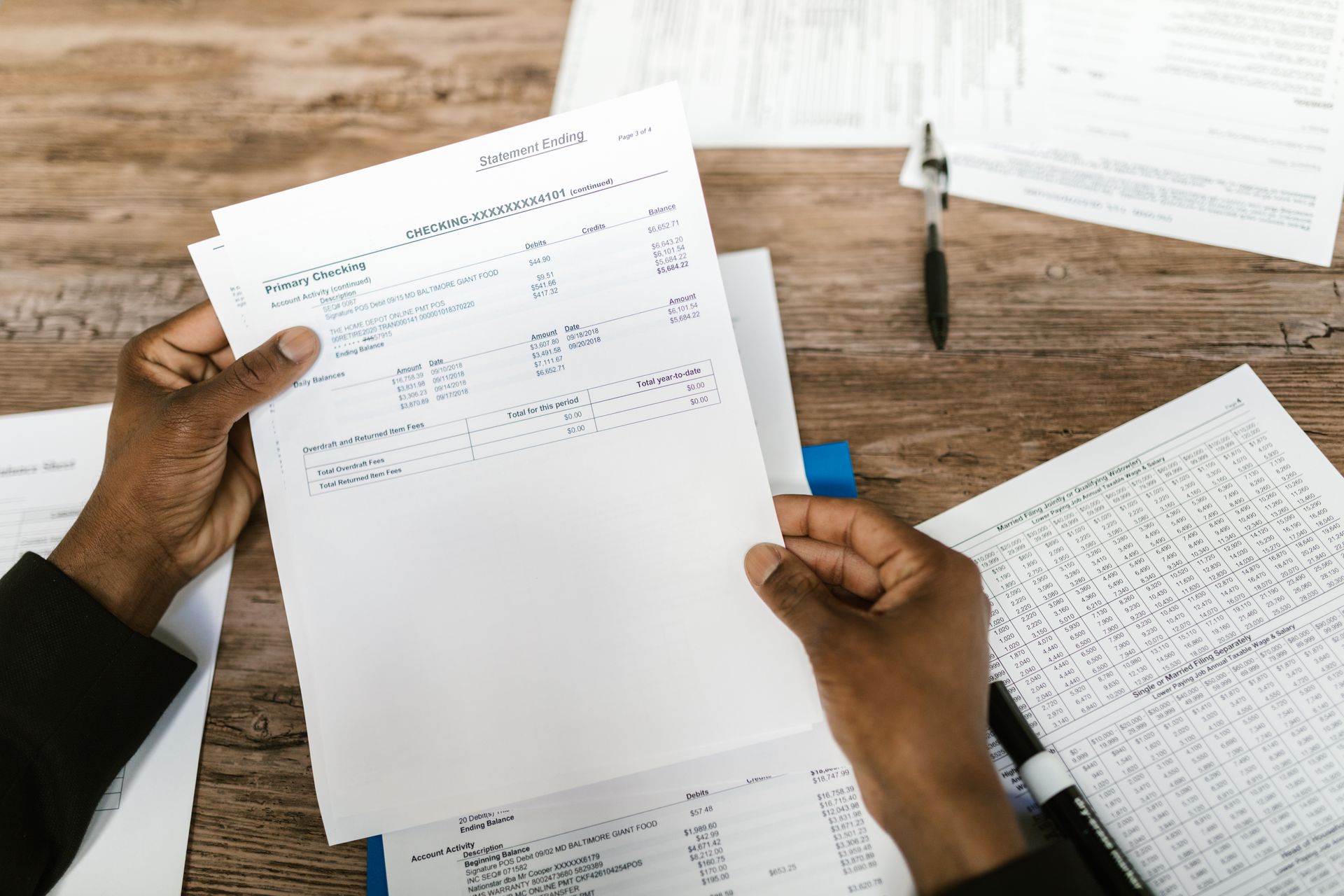
Bank statements (6–12 months). Business bank statements showing cash flow in and out. Lenders scrutinize these for consistency with your stated revenue, for large unexplained deposits, and for signs of cash-flow stress like frequent negative balances.
Accounts receivable and payable aging reports. Who owes you, who you owe, and how overdue each is. These reveal working-capital health that the P&L alone does not show.
Debt schedule. A list of all existing business debts: lender, balance, payment, maturity date. Lenders will find these anyway — presenting them upfront signals transparency.
Business licenses and formation documents. Articles of incorporation or organization, business licenses, and any DBA registrations. Basic, but missing paperwork causes silly delays.
Personal financial documents. Your personal tax returns, pay stubs (if you take a salary), and personal bank statements — because for small businesses, the owner’s finances are part of the underwriting. Our personal loan requirements guide covers similar documentation from the consumer side.
Keep everything digital, organized, and current. A shared folder with clearly named files (“2024 Business Tax Return,” “P&L Jan–Sep 2026”) makes you look professional before anyone reads a number.
Pillar 2: Your Loan Purpose and Repayment Story
Lenders fund purposes, not businesses. “We need $75,000” is a request; “We need $75,000 to purchase a second delivery van, which will let us serve the north-side route generating an estimated $12,000 monthly revenue, repaid from operating cash flow over four years” is a fundable proposition.
For each application, prepare:
A specific use of funds. Itemize what the money buys. Equipment, inventory, hiring, expansion, refinancing existing debt — each has different risk implications, and specificity builds credibility.
The expected return. How does this investment generate the cash to repay itself? Lenders are not venture capitalists seeking upside — they want to see a plausible path from the investment to the payments.
A repayment source. Which cash flow covers the payments? Historical operating cash flow is strongest; projected cash flow from the investment itself is acceptable if credible; “we will figure it out” is not.
The amount and term you are requesting — and why. Requesting $200,000 when $120,000 suffices signals you have not done the math. Match the request to the need, and match the term to the asset’s life (short-term needs get short-term structures).
Write this as a one-to-two-page summary. It forces clarity in your own thinking and gives the lender a narrative to hang the numbers on. Our overview of business loan types helps you match the purpose to the right structure before you write the summary.
Pillar 3: Your Personal Credit and Financial Standing
For small businesses — especially young ones and sole proprietorships — the owner’s personal credit is a major underwriting factor. Before applying:
- Check your personal credit reports for errors and dispute anything wrong. Our dispute guide walks through the process.
- Pay down personal revolving balances to improve utilization — one of the fastest legitimate score boosts, as our credit score calculation guide explains.
- Avoid new personal credit in the months before applying.
- Know your personal DTI including the proposed business loan payment if you will personally guarantee it.
Also prepare for the personal guarantee question. Many small business loans require owners to personally guarantee the debt — our explainer on what a personal guarantee means details the implications. Decide in advance whether you will sign one, and under what terms, rather than discovering the requirement at the signing table.
Choosing the Right Lender for Your Situation
Not every lender fits every business. Before applying broadly, target wisely:
Banks suit established businesses with strong financials seeking larger amounts at competitive rates. Expect thorough documentation requirements and slower timelines.
Credit unions can be more flexible, especially for members, with competitive pricing.
Online lenders suit businesses needing speed or with profiles that do not fit bank boxes — at higher cost. Useful when timing matters more than price.
SBA-backed lenders suit businesses that qualify and can tolerate a longer process in exchange for better terms. Our SBA loans explainer covers the guarantee mechanics and the paperwork involved.
Equipment vendors and specialized lenders suit asset-specific needs — financing the equipment through the seller or a specialist is often simpler than a general-purpose loan.
Apply to a shortlist, not the entire market. Each formal application costs time and (sometimes) a credit inquiry; targeted applications to well-matched lenders outperform scattershot approaches.
The Application Itself: What to Expect
With preparation done, the application process typically unfolds as:
- Initial submission. The application form plus your document package. Online lenders may decide preliminarily within hours; banks take longer.
- Follow-up questions. Underwriters will probe anything unclear — be responsive and answer with documents, not just words.
- Site visits or interviews. For larger loans, expect the lender to want to see the business and meet the owner. Treat it as the important meeting it is.
- Term sheet or commitment letter. The lender’s offer: amount, rate, term, fees, collateral, and covenants. Review every line — our guide to business loan costs and terms explains what to scrutinize.
- Closing and funding. Final documents, signatures, disbursement.
Timelines vary enormously: days for online lenders, weeks for banks, months for SBA-backed loans. Our breakdown of business loan approval timelines details what drives the differences and the delays.
Common Preparation Mistakes That Sink Applications
- Applying with unfiled taxes. Nothing says “disorganized” like missing tax returns. File first, apply second.
- Commingled finances. Personal expenses running through business accounts (or vice versa) muddy every number the lender analyzes. Separate them months before applying.
- Stale financials. Submitting last year’s P&L when you are nine months into this year suggests you do not know your own numbers. Keep statements current.
- Unexplained deposits. Large, undocumented deposits trigger anti-fraud scrutiny. Document every significant inflow.
- Hiding existing debts. Lenders will find them on credit reports and bank statements. Disclosed debts are underwriting inputs; hidden debts are trust violations.
- No clear purpose. “Working capital” without specifics reads as “we are short on cash and do not know why.” Diagnose the need before you borrow for it.
- Overstating projections. Aggressive forecasts undermine credibility. Base projections on history, and label assumptions explicitly.
- Ignoring the personal side. Owners who prepare the business file immaculately but neglect their personal credit get blindsided when the personal pull comes back weak.
Preparing for Specific Loan Types
Different products emphasize different preparation:
Term loans reward historical financials — the longer and cleaner the record, the better. Have 2–3 years of filed returns ready and be prepared to explain any unusual year.
Lines of credit reward cash-flow documentation — lenders want to see the gaps the line will bridge and the inflows that will repay draws. Prepare monthly cash-flow statements showing the seasonality or timing patterns that justify the line.
Equipment financing rewards asset specifics — quotes, specifications, and the equipment’s expected useful life matter as much as financials. Get vendor quotes in writing before applying.
Invoice financing rewards receivables quality — aging reports and customer concentration (a few big customers is riskier than many small ones) take center stage. Clean, current aging reports are the core document here.
SBA loans reward patience and completeness — the government guarantee adds a review layer, so prepare for the most documentation-intensive process of all. Expect forms beyond the lender’s own requirements and plan for the longest timeline.
Match your preparation effort to the product’s priorities rather than preparing generically.
Frequently Asked Questions
What if I get denied after all this preparation?
Denial is data, not defeat. Ask the lender for the specific reasons — they are required to provide adverse-action notices for many loan types, and even informal feedback is valuable. Address the cited weaknesses (credit, cash flow, collateral, purpose clarity), wait the appropriate time, and reapply stronger. Many owners succeed on their second or third attempt. Also consider whether a different product or smaller amount fits better — a denial for $200,000 may become an approval for $120,000 with the same file.
How do I apply for a business loan with bad personal credit?
It is harder but not impossible. Lead with business strengths: strong cash flow, solid collateral, long operating history. Consider secured products (equipment financing where the asset secures the loan), SBA microloans, or lenders specializing in challenged credit — at higher cost. Simultaneously work on the personal score, since even modest improvement expands options. And be realistic about amounts: smaller, well-documented requests succeed where ambitious ones fail.
How long should I prepare before applying?
If your books are clean and documents current, a focused two-to-four weeks of preparation suffices. If your bookkeeping is months behind, taxes unfiled, or credit damaged, allow two to six months. The honest answer: start preparing before you need the money, and maintain lender-ready financials as an ongoing discipline rather than a pre-application scramble.
Do I need a business plan to get a business loan?
For established businesses with strong financials, a formal business plan is often unnecessary — the numbers speak. For startups, businesses seeking large amounts, or SBA applications, a business plan (or at least a clear written purpose-and-repayment summary) is typically expected. When in doubt, write the two-page version: it clarifies your own thinking even if no one asks for it.
Can I apply to multiple lenders at once?
Yes, and comparing offers is wise — but be strategic. Submit complete applications to a shortlist of well-matched lenders rather than blasting applications everywhere. Each application consumes your time in follow-ups, and while business credit inquiries work differently from consumer ones, a scattershot approach still signals desperation. Compare the resulting term sheets on total cost, using APR-equivalent thinking even when lenders quote factor rates.
What if my business is less than two years old?
Young businesses face stricter scrutiny but have options: stronger personal credit and guarantees, collateral-backed products, SBA programs designed for newer businesses, and smaller initial requests that build a repayment track record. Document everything from day one — your first year’s records become your second year’s application file.
Should I use a loan broker?
Brokers can match you with suitable lenders and package your application professionally, which helps if you are unsure where you fit. They charge fees or earn commissions, so weigh the cost against the value — and never let a broker discourage you from also approaching lenders directly. The final decision and the terms are yours to evaluate regardless of who made the introduction.

Conclusion
How to apply for a business loan, done right, is really how to prepare for a business loan: assemble complete financials, define a specific purpose with a credible repayment story, strengthen your personal credit, target well-matched lenders, and present a file that makes approval easy. The application itself is just the delivery mechanism for preparation.
Owners who treat preparation as an ongoing discipline — clean books, filed taxes, separated finances, monitored credit — never scramble when opportunity knocks. They apply from strength, negotiate from options, and borrow on better terms. This guide is educational, not financial advice — but the preparation habit it describes pays dividends far beyond any single loan. Continue with our business loan guides for timelines, lender criteria deep-dives, and product explainers.